Abandoned Mine Liability and the Good Samaritan Problem
A group willing to treat the drainage from a mine nobody has worked in a century faces a peculiar obstacle: the statutes that would punish the original operator, if it still existed, attach instead to the party that shows up with equipment.
The rule in short
Liability for an abandoned mine runs to owners and operators under the environmental cleanup statute and to anyone discharging pollutants under the water statute, without regard to who caused the contamination. A volunteer who improves conditions short of meeting water quality standards can become the responsible party for what remains. The federal reclamation fund, financed by a fee on coal production, pays for official work but reaches coal sites first.
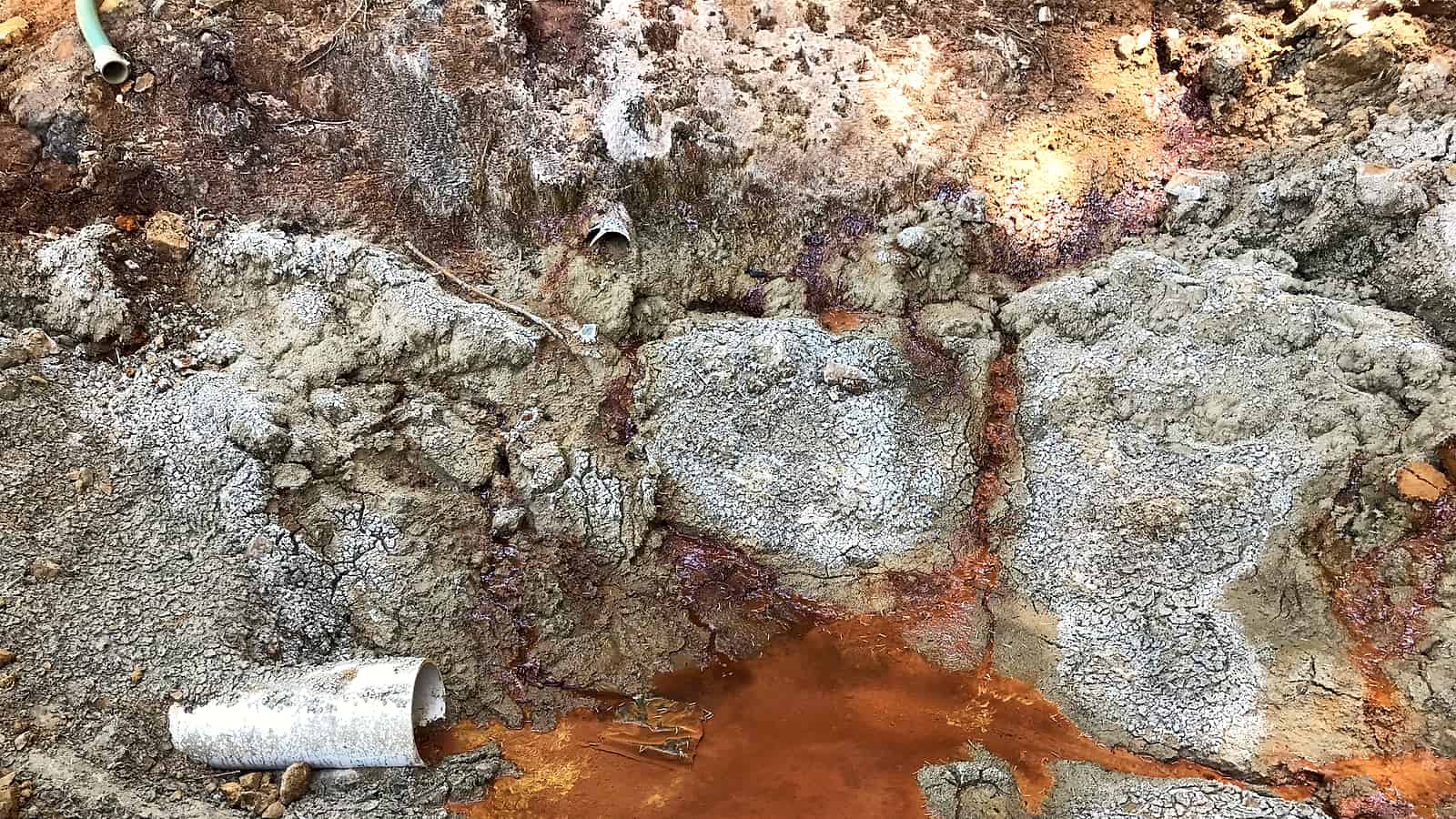
The workings that produced the American West were mostly abandoned before any statute told anyone how to close them. Shafts stand open, waste rock sits where it was dumped, and adits drain metal-laden water into headwater streams every hour of every year. The companies are gone, the individuals are dead, and the question is not who should have prevented it but who is willing to be held responsible for what remains.
Liability that follows contact rather than fault
The federal cleanup statute assigns responsibility by category. The current owner or operator of a facility is liable for response costs, as is the owner or operator at the time of disposal, along with those who arranged for disposal and those who transported waste to the site. Liability is strict, meaning no one need prove negligence, and courts have generally applied it jointly and severally where the harm is indivisible, so a party with a small share of the history can be pursued for the whole cost.
None of that was written with volunteers in mind, but nothing in it excludes them either. Operator status turns on control over the facility and over decisions about disposal. A group that installs a treatment system, moves waste rock or plugs a portal is exercising exactly that kind of control, and its intentions do not appear anywhere in the statutory test.
The discharge permit trap
The water statute produces the sharper problem. Discharging a pollutant from a point source into navigable waters without a permit is unlawful, and a portal or a collection ditch is a point source. While nobody touches the site, enforcement has no practical target. Once a volunteer collects the flow, treats part of it and returns it to the creek, that volunteer is a plausible discharger.
A permit would seem to be the answer, and it is not, because a permit carries effluent limits derived from water quality standards. A cleanup that removes most of the metal load but not all of it cannot meet those limits, and a permit the holder cannot comply with is a liability rather than a shield. The volunteer is then exposed to enforcement and to citizen suits for the residual discharge — a discharge that was worse before it arrived. The incentive this creates is perverse and well understood: the legally safest course at a draining mine is to leave it alone.
Neither statute measures a party against the condition it found. Liability turns on status and on the discharge as it exists, so a group that reduces a metal load by nine-tenths stands in the same formal position as one that caused the contamination. That asymmetry, rather than any shortage of willing volunteers or money, is what has kept most draining adits untouched.
Why the original parties are unreachable
The liability scheme assumes someone to pursue, and at legacy mines that assumption usually fails. Operating companies were dissolved generations ago, and successor liability requires a corporate thread that rarely survives a century of asset sales. Where a successor does exist, the contribution litigation can run longer than the cleanup would have taken.
Insolvency accounts for many of the more recent additions to the inventory. Reclamation obligations owed to a regulator sit uneasily in bankruptcy, since an order to clean up is not obviously a claim that money can discharge, and courts have divided on when it becomes one. A company that emerges having shed its obligations leaves ground that is legally abandoned though it was permitted and bonded, and the bond proceeds meet only the amount that was calculated, not the cost that materialized.
The legislative answer and its limits
Proposals to shelter qualifying remediation projects circulated in Congress for many years without passing, largely because a shield broad enough to be useful was also broad enough to be exploited by parties with a real connection to the pollution. Congress eventually enacted a narrow pilot: a limited number of permits available to eligible parties who had no role in creating the contamination and no ongoing interest in the minerals, for projects reviewed and approved in advance, with the permit displacing the ordinary discharge obligation for the work described in it.
The design is deliberately cautious. The number of permits is capped, eligibility excludes anyone who might otherwise be liable, the work must be defined and approved before it begins, and financial assurance is required. Whether that framework unlocks meaningful work at scale, or proves too narrow and too administratively heavy for the volunteer organizations it was written for, is not yet answerable.
Who pays for the official work
Alongside the liability question sits a funding question, and the two are answered by different statutes with very different reach.
| Route | Source of money | What it reaches | Principal limitation |
|---|---|---|---|
| Abandoned mine reclamation fund | A per-ton fee on coal production | Coal sites abandoned before the reclamation statute applied | Hardrock sites are largely outside it |
| Federal cleanup program | Appropriations and recoveries from liable parties | Sites where a hazardous substance release is documented | Listing and litigation take many years |
| Land agency reclamation programs | Agency appropriations | Physical hazards and some water quality work on public land | Budget-limited and inventory-limited |
| Good Samaritan pilot permit | The volunteer's own funding | Defined projects by parties with no liability connection | Capped in number and narrow in eligibility |
The reclamation fund is the largest dedicated source, and its priorities are set by statute: protection of public health and safety from extreme danger comes first, other health and safety hazards second, and restoration of degraded land and water third. Because the fee falls on coal, the money follows coal, and the hardrock legacy that produces most of the acidic drainage in the mountain West has no equivalent. Modern operations avoid adding to the inventory through the security arrangements described in permitting and reclamation bond release, though a bond set below the true cost simply transfers the shortfall. Long-term water treatment obligations, discussed in mine water rights and dewatering, are the ones most likely to outlive the company that incurred them. And because an unpatented claim carries no royalty to the United States, the historic hardrock industry left behind no revenue stream to draw on, which is the whole reason the funding asymmetry exists. Ground surrendered from a federal coal lease at least arrives with a bond attached.
Points to carry away
- Cleanup liability under the federal environmental statute is strict and reaches current owners and operators regardless of fault.
- Treating or rerouting mine drainage can make the volunteer the discharger for permitting purposes.
- A discharge permit requires meeting water quality standards, which a partial remedy by definition does not.
- The result is a structural disincentive: doing nothing carries less legal exposure than improving the site.
- The abandoned mine reclamation fund is financed by a per-ton fee on coal production and is directed first at hazards to public health and safety.
- Hardrock abandoned sites have no comparable dedicated funding source and depend on agency budgets and settlements.
Questions readers ask
Why does buying an old mine site create liability for contamination somebody else caused?
Because the cleanup statute assigns liability by status rather than by fault. A current owner of a facility is liable, and the fact that every drop of contamination predates the purchase is not a defense in itself. Congress provided narrow protections for purchasers who make the required inquiry before buying, take reasonable steps afterward and cooperate with the authorities, but those protections are conditioned and easy to lose. Property with historic workings on it is therefore examined far more carefully in diligence than the surface acreage would suggest.
Do federal land agencies clean up mines on their own land?
They do, within their budgets, and the land managing agencies maintain inventories and remediation programs for sites on public land. The constraint is money and priority rather than authority. Inventories remain incomplete because locating and characterizing features scattered across mountain country is itself expensive, and the work competes against every other program. Sites are ordinarily addressed in order of hazard to people, so an open shaft near a trail is dealt with long before a seep degrading a headwater stream.
Can a state release a volunteer from liability?
A state can settle its own claims and several have programs that do exactly that for voluntary cleanups. What a state cannot do is extinguish federal liability or waive the federal permit requirement, so a volunteer with a state agreement may still face a federal enforcement risk and a citizen suit brought by anyone. That gap is why state assurances have not by themselves unlocked volunteer work at draining mines, and why the solution had to come from federal legislation.
Sources
- Cornell Legal Information Institute — 42 U.S.C. 9607, Liability Under CERCLAWho is liable for response costs and the narrow defenses available.
- Cornell Legal Information Institute — 42 U.S.C. 9601, CERCLA DefinitionsDefines owner, operator and the purchaser protections that turn on inquiry.
- Cornell Legal Information Institute — 33 U.S.C. 1342, National Pollutant Discharge Elimination SystemThe permit obligation that attaches to whoever discharges from a point source.
- Cornell Legal Information Institute — 30 U.S.C. 1231, Abandoned Mine Reclamation FundEstablishes the fund and the grants made to state and tribal programs.
- Cornell Legal Information Institute — 30 U.S.C. 1232, Reclamation FeeThe per-ton fee on coal production that finances the fund.
- Cornell Legal Information Institute — 30 U.S.C. 1233, Objectives of the FundThe priority ranking that directs money to health and safety hazards first.
- Office of Surface Mining Reclamation and EnforcementThe federal office administering abandoned mine land grants and inventories.
Justice Partners Journal is a publication, not a law firm. This article states general rules and cites its sources; it is not advice about any particular case, and the law differs by state and changes over time.