Authentication Disputes and Why Experts Stopped Opining
An opinion that a painting is not by the artist can remove almost all of its value overnight. The people best placed to give that opinion learned that giving it invites litigation they win at ruinous cost, and many of them stopped.
The rule in short
Attribution is an expert judgment with an immediate and often total effect on value, which is why an adverse opinion draws claims for defamation, product disparagement, negligent misrepresentation, tortious interference and antitrust conspiracy. Defendants usually prevail, because a reasoned opinion is not a false statement of fact, but the cost of prevailing led several artist foundations to close their authentication boards.
Attribution is unlike most questions in the art market because the answer is close to binary. A canvas accepted as the work of a major artist and the identical canvas rejected are not two prices on a spectrum; the second is often worth a small fraction of the first. That structure guarantees that adverse opinions are contested, and it explains a change in professional behavior that has left owners with fewer places to go.
What an attribution opinion actually does
An opinion is a judgment about authorship reached from connoisseurship, documentary evidence and technical examination. It is not a title determination, which is the separate question addressed in provenance and the limits of buying in good faith, and it is not a valuation. What it does is determine whether the work has a market at all.
Three sources of opinion have historically carried weight: an artist foundation's authentication board, the committee compiling the artist's catalogue raisonné, and a small number of individual scholars whose views the trade accepted. Auction houses form their own view for cataloging purposes, backed by a limited warranty in their conditions of sale, but they are not in the business of issuing opinions on works they are not selling.
The claims that follow an adverse opinion
Owners have pleaded a consistent set of theories. Defamation and product disparagement assert that the expert made a false statement of fact about the work. Negligent misrepresentation asserts that the expert owed a duty of care and failed it. Tortious interference asserts that the opinion destroyed a pending sale. Antitrust claims assert that a foundation and its board conspired to restrain the market in the artist's works, sometimes alleging a motive to protect the value of the foundation's own holdings.
Defendants have generally prevailed. A reasoned attribution is ordinarily characterized as opinion rather than as a verifiable false assertion; there is usually no duty of care to a stranger who submitted a work for examination; and the antitrust theories have struggled to identify a relevant market and an agreement in restraint of it. Anti-SLAPP statutes in several states now supply an early exit with fee recovery where the opinion addressed a matter of public interest.
The foundations that dissolved their boards did so after successful defenses. Discovery in a case attacking an attribution reaches decades of scholarly correspondence, internal deliberations and every prior opinion the board issued. The expense is borne by a charitable body whose purpose is scholarship, and the fee awards available afterward rarely approach it.
The withdrawal of the institutional opinion
Several artist foundations wound up their authentication committees, and others quietly stopped accepting submissions. Legislative responses have been proposed — heightened pleading requirements for claims against authenticators, a clear and convincing standard, and fee shifting for a prevailing expert — and introduced more than once without being enacted. The result is that for some artists no institution will express a view at all, and the market is left with older opinions, published catalogs and inference.
That vacuum has costs beyond the individual owner. Forgeries are harder to identify when no body is examining questioned works systematically, and estates lose the ability to protect an artist's record, a function that overlaps with the attribution interest recognized in the moral rights provisions of the copyright statute during the artist's life.
Where an owner can turn
| Route | What it produces | Principal limitation |
|---|---|---|
| Artist foundation board | A formal opinion accepted by the market | Many boards no longer operate |
| Catalogue raisonné committee | Inclusion or exclusion from the scholarly record | Framed as a catalog decision, not advice to the owner |
| Auction house specialist | A cataloging view backed by a limited warranty | Available only in connection with a consignment |
| Scientific and technical analysis | Evidence on materials, age and technique | Can exclude an attribution; rarely establishes one |
| Warranty claim against the seller | Rescission or damages | The limitation period usually runs from delivery |
Submission agreements and laboratory evidence
Where opinions are still issued, they come with terms. A submission agreement typically requires the owner to release claims arising from the opinion, to keep the process confidential, to accept that no reasons need be given, and to acknowledge that the opinion is a scholarly judgment rather than a guarantee. Courts have generally enforced these, though a release cannot immunize deliberate falsehood.
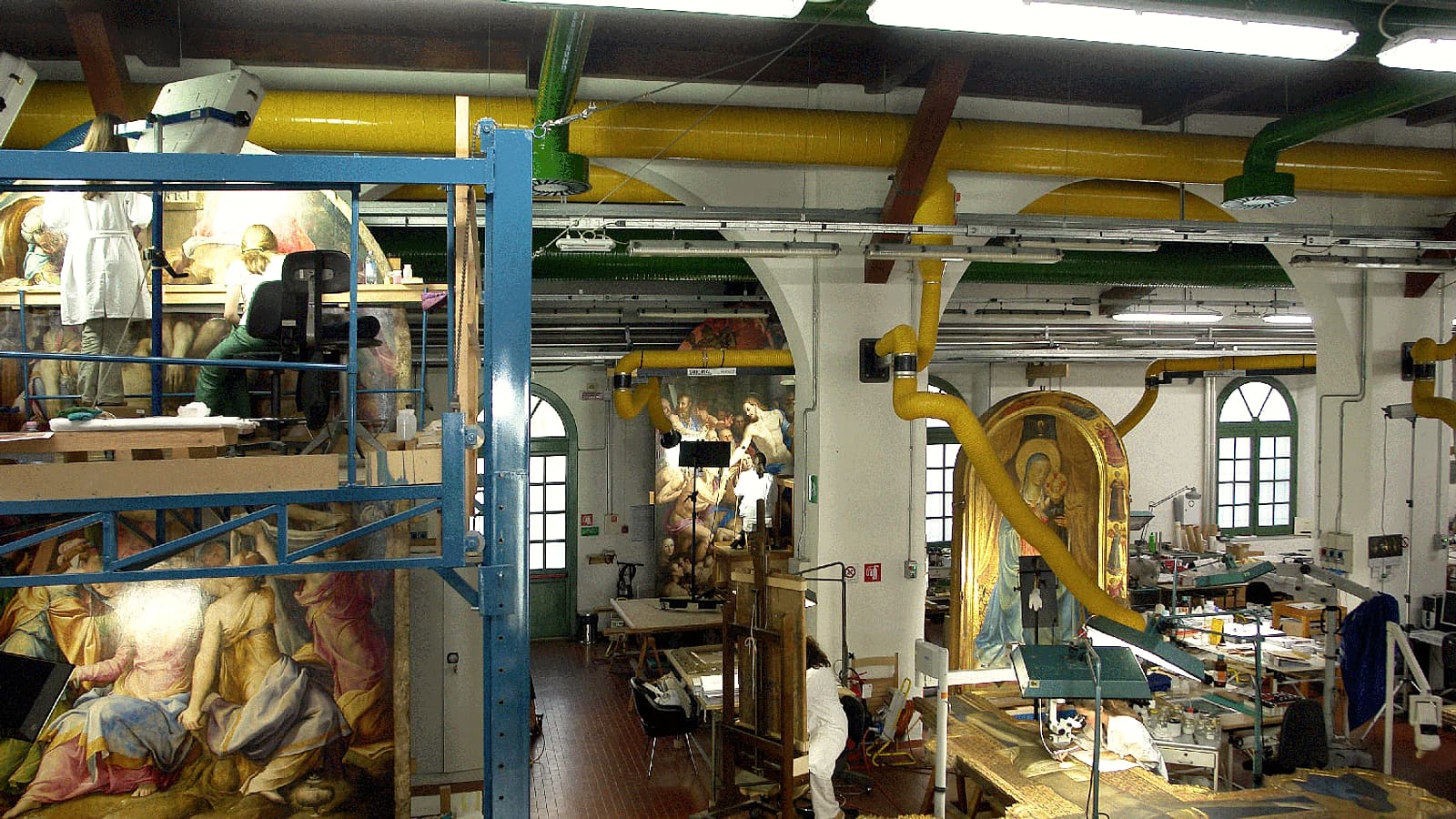
Technical analysis has taken over part of the work. Pigment and binder identification, radiography, infrared reflectography, canvas and panel analysis and radiocarbon dating can establish that a material was not available when the work was supposedly made, which ends the inquiry. What they cannot do is confirm authorship: a period canvas, period pigments and a convincing hand are exactly what a competent forger assembles. Science narrows the field; connoisseurship still decides it.
Warranties and the clock that defeats them
A buyer's contractual protection is an express warranty of authorship, created by the seller's description or affirmation and, in some states, by statute where an art merchant provides a written statement of authorship. The difficulty is timing: the period for breach of warranty ordinarily runs from tender of delivery rather than from discovery, so a reattribution reached a generation later meets a defense that has nothing to do with the merits, in the same way that the delay rules described in demand, refusal and the limitation clock dispose of ownership claims.
Buyers who care about this negotiate around it: an extended contractual warranty period, a rescission right triggered by exclusion from a named catalog, an escrow of part of the price, or a condition that the sale is subject to a stated opinion being obtained. Those terms belong in the sale agreement itself, alongside the allocation of risk that also governs consignment and the failure of a dealer.
Points to carry away
- An adverse attribution can reduce a work's market value to almost nothing, which gives owners a large incentive to sue.
- The claims brought against authenticators include disparagement, negligent misrepresentation, tortious interference and antitrust conspiracy.
- A reasoned opinion on attribution is generally treated as opinion rather than as a false statement of fact.
- Several artist foundations dissolved their authentication boards after successful defenses that cost more than the boards could sustain.
- Submission agreements now routinely require releases, confidentiality and an acknowledgment that the opinion is not a guarantee.
- Scientific analysis can exclude an attribution decisively but rarely establishes one on its own.
Questions readers ask
Does a negative opinion make the expert liable if it turns out to be wrong?
Not by itself. Liability requires more than an incorrect conclusion: a defamation or disparagement claim needs a false statement of fact, and an attribution reached through examination and reasoning is generally treated as opinion. A negligent misrepresentation claim requires a relationship in which the expert owed the claimant a duty of care, which usually does not exist where the expert examined the work at the owner's request without undertaking to advise on its value. Being wrong, without more, is not actionable.
Why is a catalogue raisonné entry treated as authoritative?
Because it is the scholarly record of an artist's output, compiled from primary material and published with reasoning that others can test. The market treats inclusion as the closest thing to a settled attribution and exclusion as close to fatal. That practical authority is also the reason compilers are cautious: an entry decision has financial consequences, and many committees now state expressly that inclusion is a scholarly judgment about the catalog rather than an opinion issued to the owner of the work.
Can a buyer insist on a warranty of authenticity instead?
A buyer can bargain for one, and a written statement of authorship by an art merchant creates an express warranty in some states by statute. The obstacle is time. The limitation period for breach of warranty ordinarily runs from tender of delivery, not from discovery, so a misattribution identified many years later can be barred before it is found. Buyers who want durable protection negotiate an extended contractual period, a right of rescission tied to a stated authority, or both.
Sources
- Cornell Legal Information Institute — U.C.C. 2-313, Express Warranties by Affirmation, Promise, Description, SampleHow a description or affirmation about a work creates an express warranty of authenticity.
- Cornell Legal Information Institute — U.C.C. 2-725, Statute of Limitations in Contracts for SaleThe four-year period running from tender of delivery that defeats most late attribution claims.
- Cornell Legal Information Institute — U.C.C. 2-312, Warranty of Title and Against InfringementThe distinct warranty about ownership, frequently confused with a warranty about authorship.
- New York State Senate — Arts and Cultural Affairs Law 13.01, Artistic Authorship RightsA state provision on attribution and alteration of works of fine art.
- Cornell Legal Information Institute — 15 U.S.C. 1125, False Designations of OriginThe federal false designation provision sometimes invoked where a work is falsely attributed.
- Cornell Legal Information Institute — Federal Rule of Evidence 702, Testimony by Expert WitnessesThe standard a connoisseurship or scientific opinion must meet to be admitted at trial.
Justice Partners Journal is a publication, not a law firm. This article states general rules and cites its sources; it is not advice about any particular case, and the law differs by state and changes over time.