Automatic Revalidation for Short Trips to Canada and Mexico
A nonimmigrant whose visa has expired but whose status has not can leave for a few days and return without applying for anything. The provision is narrow, it is conditioned on where the traveler went, and one ordinary decision cancels it outright.
The rule in short
Regulation permits an expired nonimmigrant visa to be treated as automatically extended to the date of application for readmission where the holder departed only to contiguous territory for thirty days or less, holds an unexpired admission record, has maintained status, and returns within the period. Students and exchange visitors may also use adjacent islands. Applying for a new visa while abroad ends the benefit, and nationals of designated state sponsors of terrorism cannot use it.
A visa foil and a lawful status are separate things that expire on separate schedules, and the mismatch between them creates a practical problem for anyone who travels. Automatic revalidation is the narrow answer the regulations give: a brief trip north or south, and the expired document is treated as extended to the day the traveler comes back.
The conditions the regulation sets
The provision treats an expired nonimmigrant visa as automatically extended to the date of application for readmission where several conditions hold together. The traveler must have departed the United States for a period of thirty days or less. The departure must have been to contiguous territory — Canada or Mexico — and for students and exchange visitors, to contiguous territory or to adjacent islands. The traveler must hold an unexpired admission record endorsed by the border agency, must have maintained and intend to resume the nonimmigrant status, and must present a valid passport at readmission.
Adjacent islands is a defined term rather than a geographical impression. The statute lists them, and the list covers most of the Caribbean while excluding Cuba, which is named but carved out of the benefit. Nothing in the provision reaches travel to Europe, Asia, or Central and South America, however short.
The thirty days are counted as an absence, not as a stay abroad in some looser sense. A traveler who leaves on one day and returns on the thirtieth is inside the provision; a traveler delayed by weather into the thirty-first is outside it, with nothing to fall back on but an application at a post. Because the counting is unforgiving and entirely mechanical, the sensible planning margin is a week rather than a day.
What the provision revalidates and what it leaves alone
It revalidates the visa. It does not extend status, restore status, or repair a defective admission. A traveler whose admission record has expired cannot use it, because an unexpired record is one of the conditions. A traveler who has stopped attending the program that supported the admission has a status problem the provision does not address, and anyone admitted without a fixed end date should understand how a duration-of-status admission behaves before assuming the record is still good.
One feature surprises people in the traveler's favor. The classification on the expired visa need not match the current status. Where a person entered as a student and later changed status inside the country, the expired student visa can carry the return provided the admission record shows the current classification and the approval notice is available. That is the single most common productive use of the rule.
A traveler who uses the trip to apply for a new visa at a post in Canada or Mexico cannot fall back on automatic revalidation if the application is refused or is still pending. The two strategies are mutually exclusive, and choosing to apply forfeits the safety net. Travelers who intend to apply should plan for the possibility of remaining outside the country until the application is decided.
Who is excluded
The exclusions are categorical rather than discretionary. Nationals of countries designated as state sponsors of terrorism are outside the provision entirely, whatever their status and however short the trip. Travelers whose visa has been revoked or canceled have nothing to revalidate. Travelers admitted under the visa waiver arrangements have no visa in the first place and are outside the question, as are travelers whose visa was voided by operation of the statute after an overstay — a consequence explained in the rule that voids a visa on overstay.
| Condition | Most nonimmigrants | Students and exchange visitors |
|---|---|---|
| Permitted destinations | Canada and Mexico only | Canada, Mexico, and adjacent islands other than Cuba |
| Maximum absence | Thirty days | Thirty days |
| Admission record required | Unexpired and endorsed | Unexpired and endorsed, with a current program record |
| Effect of applying for a visa abroad | Benefit lost on refusal or while pending | Benefit lost on refusal or while pending |
| Nationals of designated state sponsors of terrorism | Not eligible | Not eligible |
The exclusion for a pending or refused visa application is the one that catches sophisticated travelers, because applying at a Canadian or Mexican post looks like prudence rather than risk. It is not treated that way. The regulation withdraws the benefit from anyone who has applied and been refused, and the border agency applies the same treatment where the application is still under consideration. A traveler who submits an application and then thinks better of it does not restore the position by withdrawing.
How it plays out at readmission
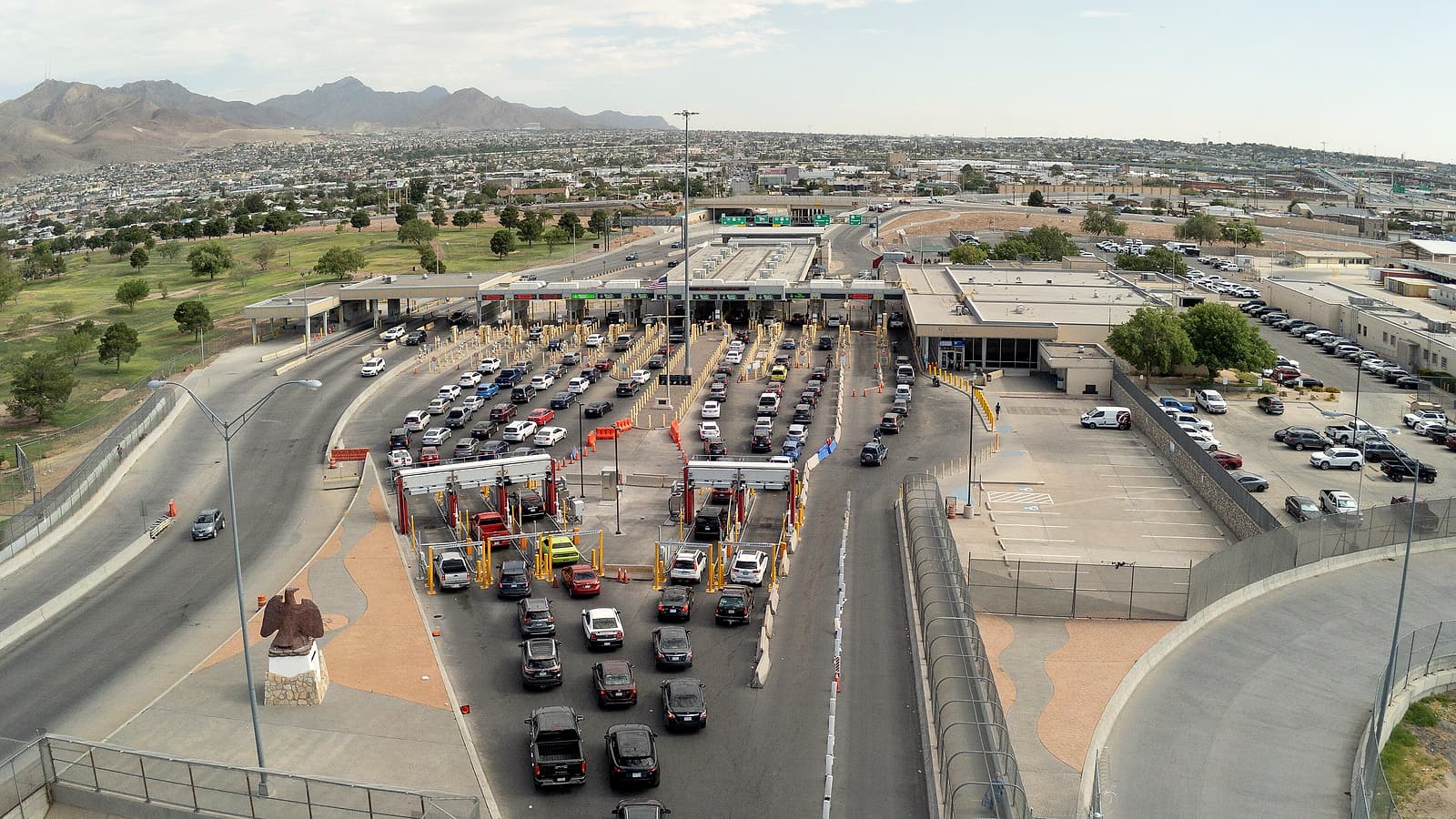
There is no application, no fee, and no advance notice to anyone. The traveler presents a passport with an expired visa and an admission record, and the officer decides whether the conditions are met. Land border ports handle this routinely. Air travel is more awkward: a carrier boarding a passenger for a flight from Canada or Mexico is looking at the same documents with less familiarity, and travelers are sometimes questioned at check-in rather than at the border.
The practical preparation is documentary. Print the admission record before departure rather than relying on retrieving it abroad. Carry the approval notice for any change or extension of status granted inside the country. Keep the program documentation current where the status depends on it. And keep the trip inside thirty days by a margin, since a delayed return converts a straightforward readmission into an application with nothing behind it.
Where a previous application was refused, the calculation changes again, because the record a refusal leaves behind is visible to the officer deciding readmission. A refusal recorded at a post in one country is not confined to that post, and it will surface in a systems check run at a land border on a Sunday afternoon.
Travelers with a complicated history — a prior refusal, a period out of status, a pending petition whose approval would change the classification — are the ones for whom a short trip carries real risk, and a conversation with an immigration attorney before booking is far cheaper than being stranded on the wrong side of a land border with a job to get back to.
Points to carry away
- The provision revalidates the visa foil only; it does not extend or restore status.
- The trip must be to contiguous territory and must last thirty days or less.
- Students and exchange visitors may also travel to adjacent islands, with Cuba excluded.
- An unexpired admission record endorsed by the border agency is required at readmission.
- Applying for a new visa while abroad ends the benefit whether the application is refused or still pending.
- The classification on the expired visa need not match the current status shown on the admission record.
Questions readers ask
Does a traveler need to carry anything special to use it?
There is no application and no form, but the evidence has to be in hand at the counter. The passport, the expired visa, a printout of the current admission record, and where the status changed inside the country the approval notice for that change are what an officer will want to see. Nothing is submitted in advance and no fee is paid. The traveler is simply presenting a case that the conditions are satisfied, and the officer at readmission decides it.
Is a trip to a third country a problem if it was short?
Yes, and this is where most failures occur. The provision is written around departure to contiguous territory, with adjacent islands added for students and exchange visitors. A traveler who goes to Canada for a weekend and flies onward to a third country has left the terms of the provision entirely, and the expired visa cannot carry the return. Itineraries that route through a third country, even briefly and even in transit, should be checked against the rule before booking.
Does it help someone whose status has lapsed?
No. The provision revalidates a document; it does nothing to status. A traveler who has fallen out of status has two problems, and the expired visa is the smaller one. Departure in that condition can also start or trigger consequences that make return substantially harder, so the sequence matters. Anyone whose status is uncertain should resolve that question before leaving the country rather than testing it at a land border on the way back.
Sources
- eCFR — 22 CFR 41.112, Validity of VisaThe regulation providing for automatic extension of visa validity and listing the exclusions.
- eCFR — 8 CFR 214.1, Requirements for Admission, Extension and Maintenance of StatusThe corresponding immigration regulation on readmission after a brief absence.
- U.S. Department of State — Automatic RevalidationThe department's statement of the conditions and of the categories that cannot use the provision.
- Cornell Legal Information Institute — 8 U.S.C. 1101, DefinitionsDefines adjacent islands, which fixes where students and exchange visitors may travel.
- U.S. Customs and Border Protection — Form I-94 Arrival/Departure Record InstructionsHow to retrieve and print the admission record a traveler must present at readmission.
- eCFR — 8 CFR Part 235, Inspection of Persons Applying for AdmissionThe inspection framework under which the officer at readmission decides the question.
- Cornell Legal Information Institute — 8 U.S.C. 1202, Application for VisasContains the voiding provision that removes a visa from the reach of any revalidation.
Justice Partners Journal is a publication, not a law firm. This article states general rules and cites its sources; it is not advice about any particular case, and the law differs by state and changes over time.