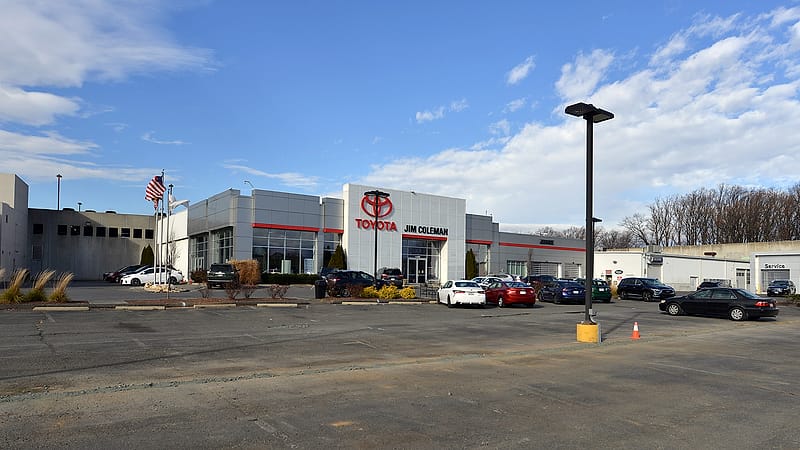
What Makes an Arrangement a Franchise
Nobody has to agree that a relationship is a franchise for it to be one. Three facts decide the question, and a distributor agreement, a license, or a dealer appointment can carry all three without the word ever appearing in the file.

The rule in short
Under the federal trade regulation rule, an arrangement is a franchise where the operator receives the right to sell under the grantor's trademark, the grantor exerts or promises significant control over or assistance to the operator's method of operation, and the operator must pay the grantor or an affiliate a required sum before or within six months of opening. All three elements must be present, and the label the parties used is irrelevant.
A franchise is not something a company decides to become. It is a characterization that attaches to an arrangement when certain facts are present, and it attaches whether or not the parties used the word, signed a document with that title, or ever considered the question. Manufacturers who thought they were appointing distributors, brand owners who thought they were granting a license, and suppliers who thought they were signing dealers have all found the answer after the fact.
The three elements of the federal test
The Federal Trade Commission's trade regulation rule on franchising defines a franchise as a continuing commercial relationship or arrangement in which the operator obtains the right to offer goods or services under the grantor's trademark; the grantor exerts or has authority to exert significant control over, or promises significant assistance to, the operator's method of operation; and the operator is required, as a condition of obtaining or beginning operation, to make a payment or commit to make a payment to the grantor or an affiliate. All three must be present.
The definition reaches an arrangement however it is denominated. That drafting choice does most of the work. Nothing turns on the heading of the contract, on whether a disclosure document was prepared, or on whether the parties believed they were creating a franchise. The rule asks what the arrangement does, and the answer is assembled from the operative terms rather than from the recitals.
The trademark element and what satisfies it
The first element is the least demanding of the three. It is satisfied where the operator obtains the right to distribute goods or services that are identified by the grantor's trademark, service mark, trade name, logotype, or other commercial symbol. The mark need not be registered. The grant need not be exclusive, and it need not be the point of the deal. A supply agreement that permits a dealer to display the manufacturer's logo on a storefront and to hold itself out as an authorized outlet has already met this element.
Arrangements lacking the trademark element are not necessarily unregulated. The Commission's separate business opportunity rule reaches sellers who provide locations, accounts, outlets, or a buyback commitment, and it applies with no trademark grant at all.
Significant control or significant assistance
The second element is where genuine analysis begins. Control and assistance are alternatives, and either suffices. Site approval, mandatory design or appearance standards, prescribed hours of operation, required production or service techniques, staffing requirements, restrictions on the customers who may be served, and a requirement to use a specified accounting or point-of-sale system are all treated as indicators of significant control. Formal training programs, an operations manual, site selection help, and a field representative who visits and evaluates are indicators of significant assistance.
What matters is whether the commitments relate to the operator's entire method of operation rather than to the quality of a single product. A manufacturer that specifies how its own item must be stored and displayed is protecting a product. A manufacturer that dictates the layout of the premises, the uniform of the staff, the software on the register, and the hours the doors are open is prescribing a business.
Grantors often assume that controls imposed to protect a mark are exempt, because trademark law requires a licensor to police quality. The rule contains no such exemption. Controls adopted for good trademark reasons still count toward the control element, and a licensor who writes an unusually detailed quality manual can create a franchise while trying to preserve a registration.
What counts as a required payment
The third element is a required payment to the grantor or an affiliate, made or promised before the operator opens or within six months of opening. The rule defines required payment broadly: it captures all consideration the operator must pay for the right to enter or begin the business. Initial fees, deposits, training charges, rent for premises subleased from the grantor, equipment purchases, sign charges, software licenses, and advertising contributions all fall inside.
The single significant carve-out is payment for goods purchased at a bona fide wholesale price for resale. Ordinary inventory bought to be resold does not count, which is why a genuine wholesale distributorship usually escapes the definition. The carve-out fails where the operator must buy inventory in a quantity it cannot reasonably sell, or must buy items above wholesale, or must buy things that are not resale inventory at all. The rule also sets a minimum: payments below a modest threshold within the first six months support an exemption rather than an obligation.
The accidental franchise
The accidental franchise is the arrangement that satisfies all three elements without anyone having intended a franchise. It arises most often in three settings. A regional manufacturer signs an exclusive dealer, adds a required starter kit and a mandatory training week, and supplies an operations manual. A licensor of a restaurant concept licenses the name and then, over several years, adds standards until the licensee's operation is prescribed end to end. A distributor is required to buy branded display equipment and signage as a condition of appointment.
The consequences are asymmetric. The operator gains rights it did not bargain for, and the grantor acquires an obligation it never performed. Where a state statute supplies rescission, the operator may be able to unwind the deal and recover what it paid. The exposure is rarely limited to one relationship: a grantor with a template contract has usually signed the same instrument many times.
| Arrangement | Trademark right | Control or assistance | Required payment | Franchise under the rule |
|---|---|---|---|---|
| Wholesale distributor buying inventory for resale | Yes, logo use permitted | Product handling only | Bona fide wholesale purchases only | No |
| Trademark license with no operating standards | Yes | No | Royalty | No |
| Dealer with mandatory training, manual and starter kit | Yes | Yes | Kit and training charges | Yes |
| Location-supplied vending program, no mark | No | Yes | Yes | Business opportunity rule instead |
| Franchise-style agreement with fees under the threshold | Yes | Yes | Below the minimum payment level | Exempt from disclosure |
State definitions that reach further
State franchise acts do not all copy the federal elements. One family, drawn from securities-style drafting, replaces the control element with a marketing plan or system prescribed in substantial part by the grantor. Another family, associated with the midwestern dealership statutes, substitutes a community of interest in the marketing of goods or services, a phrase courts have read to require shared financial interest and franchisee dependence rather than any particular operating control.
The practical result is that an arrangement can be outside the federal rule and inside a state act, or the reverse. A grantor that structures around the federal payment element may still be a dealership in a community-of-interest state, where the protections attach to termination rather than to disclosure. Anyone assessing an existing relationship has to run the definition of every state where an operator sits, which is why the question of which states require registration and which exemptions are available is usually the second question asked.
What follows once the label attaches
Characterization is not the end of the analysis; it is the beginning of a set of obligations. Federally, the grantor must prepare and furnish a disclosure document a set number of days before any payment or signature, must not contradict it in the sales process, and must observe the rule's prohibitions on unsubstantiated claims. Under state law the consequences extend into the life of the relationship, reaching good cause requirements and notice before termination and constraints on nonrenewal.
Sourcing terms deserve separate attention, because a required-purchase program can simultaneously create the payment element and raise questions under the rules on approved suppliers and rebates. Where the supply term is exclusive, the analysis borrows from ordinary distribution doctrine on exclusive dealing and tying arrangements as well. A grantor reviewing a legacy program is usually looking at three bodies of law at once, and the definition is only the door.
Points to carry away
- The federal definition has three elements and reaches arrangements however the parties have named them.
- The trademark element is satisfied by a right to sell goods or services associated with the grantor's mark.
- Significant control or significant assistance is judged by the operational commitments actually imposed.
- A required payment includes almost everything except goods bought at a bona fide wholesale price for resale.
- An arrangement missing any one element is not a franchise under the rule, however franchise-like it looks.
- Several state statutes replace the control element with a community-of-interest test that reaches further.
Questions readers ask
Does a written disclaimer that the deal is not a franchise help?
Very little. The definition operates on facts, not on characterizations, and the rule reaches relationships however denominated. A clause reciting that the parties do not intend a franchise relationship has no effect on whether the three elements are present. What such a clause can do is evidentiary: it shows that the parties turned their minds to the question, which cuts both ways. Where a grantor wants to stay outside the definition, the reliable route is to remove one element from the actual arrangement rather than to disclaim the label.
Is a minimum purchase obligation a required payment?
Not by itself. The rule carves out payment for goods bought at a bona fide wholesale price for resale, and an ordinary inventory purchase falls inside that carve-out. The carve-out narrows quickly. A requirement to buy more inventory than the operator can realistically sell, a mandatory quantity of items sold above wholesale, or a purchase of signage, software, or training that is not resale inventory can all count. The analysis looks at what the money buys, not at what the invoice is called.
Who enforces the rule if a relationship turns out to be a franchise?
The Commission does. The federal rule creates no private right of action, so an operator who received no disclosure document cannot sue on the rule alone in federal court. The practical consequence runs through state law instead: many state franchise statutes borrow the federal definition or something close to it, and those statutes generally do give private remedies, including rescission and damages. A federal violation also tends to appear as evidence in a state claim or a contract dispute.
Sources
- eCFR — 16 CFR 436.1, DefinitionsThe operative federal definition of a franchise and of a required payment.
- eCFR — 16 CFR Part 436, Disclosure Requirements and Prohibitions Concerning FranchisingThe full text of the Franchise Rule, including exemptions and prohibitions.
- Federal Trade Commission — Franchise Rule Compliance GuideCommission staff guidance on how each element of the definition is applied.
- eCFR — 16 CFR Part 437, Business Opportunity RuleThe parallel rule that reaches arrangements lacking the trademark element.
- Minnesota Statutes Chapter 80C, FranchisesA state definition that includes a community-of-interest branch alongside the trademark branch.
- Washington Revised Code Chapter 19.100, Franchise Investment Protection ActA state act whose definition and marketing plan element differ from the federal test.
Justice Partners Journal is a publication, not a law firm. This article states general rules and cites its sources; it is not advice about any particular case, and the law differs by state and changes over time.