Sand, Gravel and the Common Variety Problem
Congress closed the mining laws to ordinary sand, stone and gravel after decades of claims staked on roadbuilding material by people with no interest in mining. The exception it left behind has produced one of the most contested tests in federal mineral law.
The rule in short
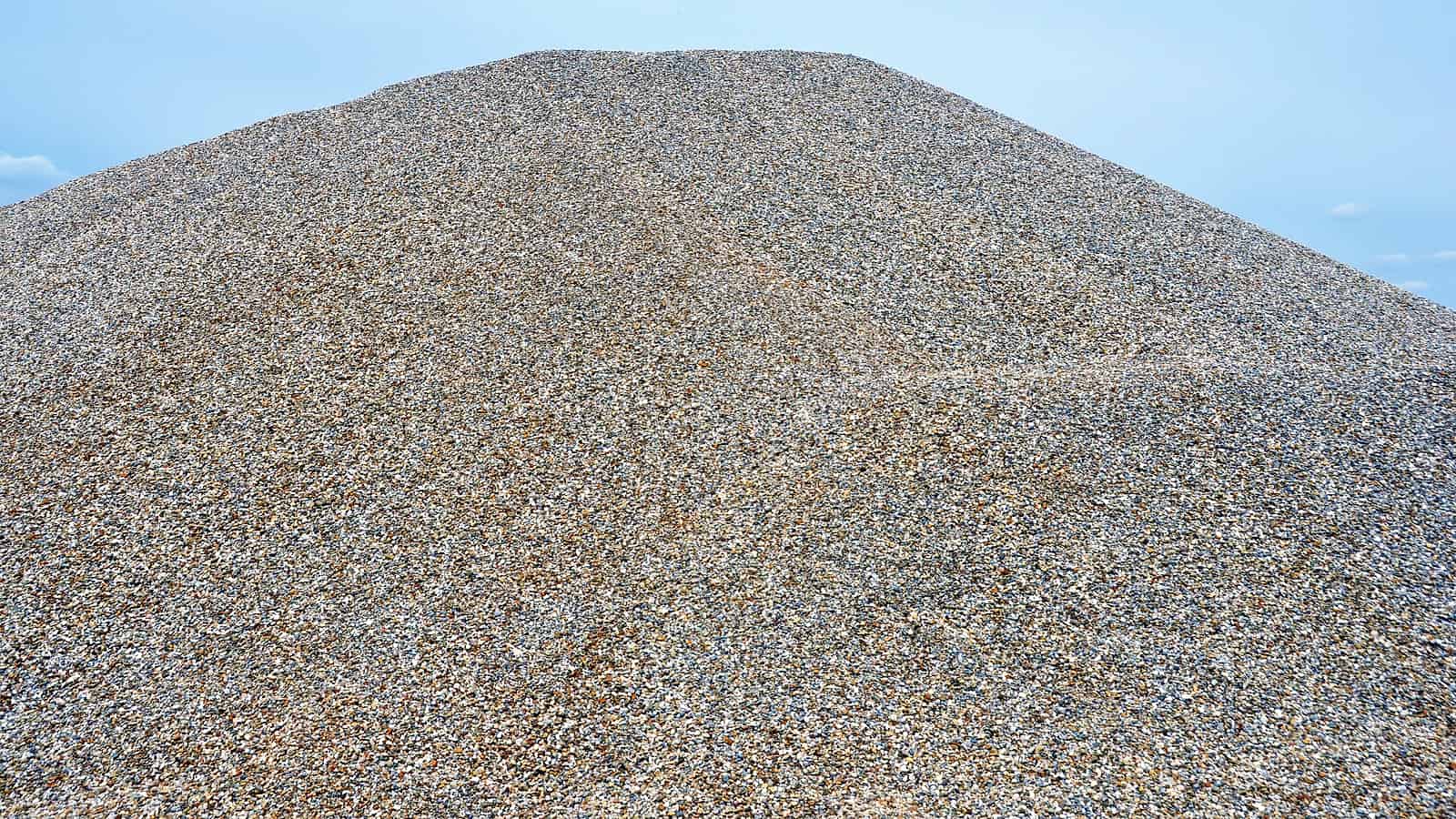
The Common Varieties Act provides that deposits of common varieties of sand, stone, gravel, pumice, pumicite and cinders are not valuable mineral deposits under the mining laws, and directs them instead to disposal by sale. A deposit escapes the exclusion only if it has a property giving it distinct and special value, a test the Interior Board and the courts apply through a structured comparison with ordinary deposits of the same material.
For eighty years anyone could stake a mining claim over a gravel bar. Some of those claims were staked by people who intended to sell aggregate, and a great many were staked by people who wanted a cabin site, a hunting camp or control of a road corridor, using the mining laws as the cheapest available route to occupy public land. Congress closed the door, and left open a gap that has been argued over ever since.
What the statute removed
The operative provision states that no deposit of common varieties of sand, stone, gravel, pumice, pumicite or cinders, and no deposit of petrified wood, shall be deemed a valuable mineral deposit within the meaning of the mining laws. Since a valuable mineral deposit is the foundation of every location, removing the deposit from that definition removes it from the location system entirely.
Two things did not happen. The material did not become unavailable; it moved to the disposal system for mineral materials, where it is sold. And existing claims were not swept away, because a claim supported by a discovery that was valid before the exclusion took effect survived it. Those surviving locations are now rare, and the government examines them closely when they surface, since the claimant must show a discovery that existed under the earlier law.
The test for an uncommon deposit
The exclusion carries a proviso: common varieties do not include deposits of those materials which are valuable because the deposit has some property giving it distinct and special value. Everything turns on that sentence, and the Department and the courts have given it a structured reading.
The inquiry compares the deposit with other deposits of the same material generally. It asks whether this deposit has a unique property, whether that property gives it a distinct and special value, and, where the material is used for the same purposes as ordinary deposits, whether it nonetheless has a distinct and special value for that use. The final element is evidentiary: the special value is expected to show up as a higher price in the market than ordinary material of the same kind commands.
The framework rules out the two arguments claimants most want to make. Scarcity in the vicinity of a buyer is not a property of the deposit, so a monopoly position on a remote highway job does not help. Nor does a superior processing plant, since the value must reside in the material rather than in what the operator does to it. What does succeed are cases where the rock itself is measurably different: stone with color and cleavage that sells as dimension stone, limestone pure enough for a chemical use, silica meeting a glass specification, pumice in blocks large enough for uses that ordinary pumice cannot serve.
Escaping the common variety exclusion returns the deposit to the location system; it does not establish a claim. The claimant must still show a discovery meeting the prudent person standard and the marketability test, proved as of the date it matters. Claims have been declared invalid after the claimant successfully established that the material was uncommon and then failed on marketability.
Who decides the question, and when
Classification is an administrative determination in the first instance. A mineral examiner prepares a report comparing the deposit with ordinary deposits of the same material, collecting price evidence, testing physical properties and evaluating whether a prudent person would develop it. If the conclusion is adverse, the government initiates a contest and an administrative judge decides, with review available before the Interior Board of Land Appeals and afterward in court.
Timing works against claimants. The examination usually occurs when the claim becomes an obstacle to something else, which may be many years after location, and the claimant must then prove conditions that existed at earlier moments using records it may never have kept. Sampling data, assays, sales invoices and price comparisons gathered contemporaneously are worth far more than reconstructions offered at a hearing.
How materials are actually obtained
The disposal system is administrative rather than possessory, and it offers several instruments depending on who wants the material and why.
| Instrument | Who may hold it | What is paid | What it conveys |
|---|---|---|---|
| Materials sale contract | Any purchaser, often after competitive bidding | Appraised fair market value of the material | The right to remove a stated quantity for a term |
| Free use permit | Governmental units and qualifying nonprofit entities | Nothing, but resale is prohibited | Material for a public project only |
| Community pit or common use area | The general public, under posted conditions | A nominal charge or nothing | Limited quantities, no exclusive right |
| Mining claim over an uncommon deposit | A qualified locator with a discovery | The annual maintenance fee | A possessory interest, defensible against others |
The difference in the last column is what operators are really arguing about. A sale contract is a term arrangement for a stated volume, terminable and non-exclusive in character, while a valid claim is indefinite tenure that can be sold, financed and defended. A large aggregate deposit worth developing over decades is worth far more held under a located claim than under a series of contracts, which is why marginal uncommon variety arguments keep being made.
Where the line sits in practice
The classification is the first question in any federal materials project, and it belongs to the wider division worked through in the three federal mineral acquisition regimes. It cannot be resolved by the operator's own view of the rock. The sensible course is a determination from the agency before any extraction, because the consequences of guessing wrong are asymmetric: an operator who takes material under a contract it did not need has overpaid, while one who mines under a void claim has committed a trespass and owes the value of everything removed.
Two related points are worth keeping straight. Ordinary materials on an existing claim belong to the United States rather than to the claim holder, so a locator cannot sell gravel stripped to reach a vein without separate authorization. And the annual obligations described in claim maintenance and forfeiture apply to every location on the books, including ones that were never valid, so a company can spend years paying fees on claims that a contest will show never existed at all. The problem of sorting materials into legal categories by their measurable properties rather than their intended use is not unique to mining; the same discipline drives tariff classification of imported goods, where the article's own characteristics likewise control.
Points to carry away
- Common varieties of sand, stone, gravel, pumice, pumicite and cinders cannot support a mining claim on federal land.
- Petrified wood is excluded from location by the same statute.
- A deposit is uncommon only if a property of the deposit itself gives it distinct and special value.
- The special value is generally tested against the price the material commands compared with ordinary deposits.
- An uncommon deposit must still satisfy the ordinary discovery and marketability requirements to support a claim.
- Common varieties are acquired by purchase under a materials contract or by free use permit rather than by staking.
Questions readers ask
What happens to a claim staked over a common variety deposit?
It is void from the beginning rather than voidable, because the statute removes the deposit from the definition of a valuable mineral deposit and there is nothing for the location to attach to. The government establishes this in a contest, and the practical consequences reach beyond the claim. Material already removed was taken without authority, which supports a trespass claim for its value, and the annual fees paid over the years buy nothing. Operators near the line usually seek a determination before extraction rather than after.
Does a high price by itself make a deposit uncommon?
No, though price is the evidence that usually decides the question. The premium must be traceable to a property of the deposit rather than to circumstances around it. A gravel pit that commands twice the going rate because it is the only source within eighty miles of a construction project is an ordinary deposit in a fortunate location, and location is not a property of the material. A stone whose color or durability lets it be sold as dimension stone at a multiple of aggregate prices is a different case entirely.
How does a county obtain gravel for road maintenance?
Ordinarily through a free use permit, which the statute makes available to governmental units and to certain nonprofit organizations for material used in a public project and not resold. Agencies also designate community pits and common use areas where the public may take limited quantities under posted conditions. Commercial producers take the other route, buying under a contract at appraised value, often after competitive bidding where more than one operator wants the same deposit.
Sources
- Cornell Legal Information Institute — 30 U.S.C. 611, Common Varieties Excluded From LocationThe exclusion and the proviso preserving deposits with distinct and special value.
- Cornell Legal Information Institute — 30 U.S.C. 601, Disposal of Mineral MaterialsAuthority to sell mineral materials and to issue free use permits.
- Cornell Legal Information Institute — 30 U.S.C. 612, Surface Use of Unpatented ClaimsMultiple surface use on claims and the reservation of materials to the United States.
- Cornell Legal Information Institute — 30 U.S.C. 22, Lands Open to Purchase by CitizensThe valuable mineral deposit requirement the exclusion operates on.
- Cornell Legal Information Institute — 43 CFR Part 3600, Mineral Materials DisposalSale contracts, free use permits, community pits and pricing.
- United States Geological Survey — Mineral Resources ProgramData on aggregate and industrial mineral production used in valuation.
- Bureau of Land Management — Mining and Minerals ProgramThe agency's administration of salable mineral materials on public land.
Justice Partners Journal is a publication, not a law firm. This article states general rules and cites its sources; it is not advice about any particular case, and the law differs by state and changes over time.