Fractionated Allotments and the Probate of Trust Land
An allotment given to one person a century ago may now be owned by several hundred people, none of whom can use it. The arithmetic that produced that result also explains why trust estates are probated by a federal agency rather than a state court.
The rule in short
Allotment converted communal reservation land into individually owned parcels held in trust. Because trust interests passed by intestate succession without partition, ownership divided at each generation until single allotments carried hundreds of undivided interests. Congress responded with a federal intestacy rule, a single-heir rule for small interests, purchase options at probate, and consolidation authority. Trust estates are probated by the Department of the Interior.
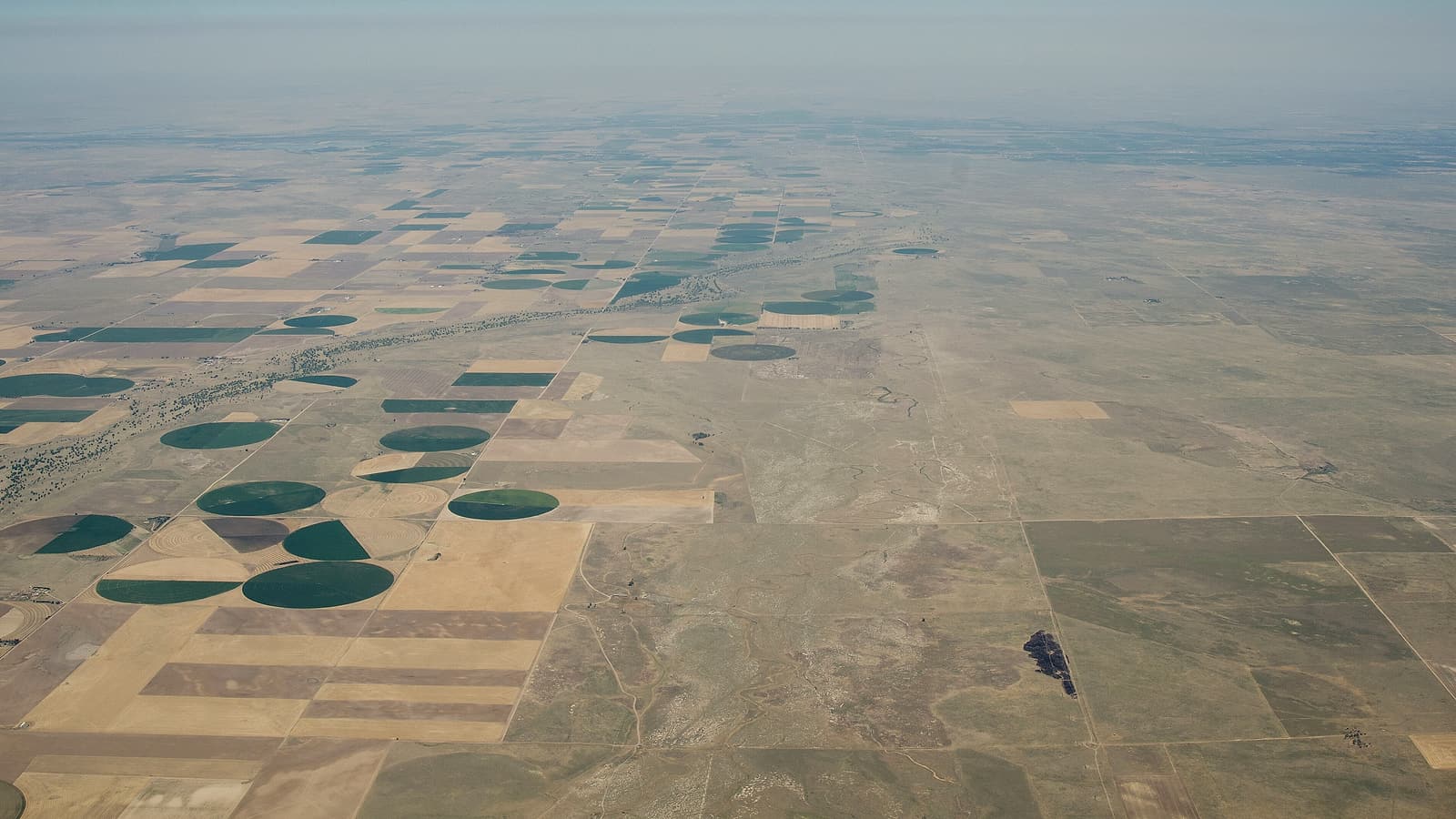
The General Allotment Act of 1887 broke reservations into individual parcels and held each in trust for a period of years, after which fee title and taxation would follow. The trust periods were extended and then made indefinite when the allotment policy was abandoned, which left millions of acres in a form of ownership that could be inherited but not divided.
The arithmetic of undivided interests
An allottee who died without a will left the allotment to the heirs as undivided interests. Nothing was partitioned, because partition of trust land requires federal action and was almost never taken. At the next death each of those interests divided again among that owner's heirs. Repeat the process across four or five generations and the result is a single quarter-section owned by several hundred people, many holding shares expressed in fractions with denominators in the millions.
The consequences compound. Leasing a tract requires the consent of owners holding a specified share of the interests, and locating hundreds of scattered co-owners to obtain it is often impossible, so the land sits idle. Income from a lease that does issue is distributed in amounts too small to cover the cost of issuing the check. Ownership records for a heavily divided tract can run to hundreds of pages, and the administrative expense of maintaining them exceeds any value the land produces.
Escheat, takings and the statute that replaced them
Congress first tried to reverse fractionation by escheat, providing that very small interests generating negligible income would pass to the tribe at the owner's death rather than to heirs. The Supreme Court struck that provision down in Hodel v. Irving as a taking of the right to pass property at death without compensation. Congress amended it, and the Court struck the amended version down in Babbitt v. Youpee for the same reason.
The Indian Land Consolidation Act as amended by the American Indian Probate Reform Act took a different approach. It supplied a uniform federal rule of intestate succession for trust and restricted interests, displacing the state and tribal rules previously applied. It reduced further division by directing that interests below a stated percentage pass to a single heir. It created a right for the tribe, co-owners and certain heirs to purchase interests at probate with the consent required by the statute. And it authorized consolidation agreements by which heirs may reallocate interests among themselves during the probate.
An Indian will devising trust or restricted interests takes effect only if it is approved in the probate proceeding, and a devise to a person who is not an eligible heir under the statute generally passes only a life estate, with the remainder going to the statutory takers. Drafting a trust estate as if it were fee property is the mistake that most often defeats an intention the testator expressed clearly.
The federal probate of a trust estate
When an owner of trust or restricted property dies, the Bureau of Indian Affairs opens a probate case and assembles the file: the death certificate, the family history, the inventory of trust interests taken from the title records, the claims of creditors, and any will. The completed file goes to the Office of Hearings and Appeals, where an administrative law judge or an attorney decision maker takes it up.
A hearing is held where the estate requires one, with notice to the heirs, the devisees, the tribe and creditors. The decision determines the heirs or approves the will, disposes of claims, and orders distribution of the trust interests. A party may seek rehearing within the period the regulations allow, and may then appeal to the Interior Board of Indian Appeals, whose decision is the final agency action open to judicial review.
Purchase at probate is exercised inside this proceeding rather than afterwards. An eligible purchaser must apply before the decision issues, the interest is appraised, and consent is required from the person who would otherwise inherit unless the interest falls below the threshold at which consent is dispensed with. Consolidation agreements are approved in the same decision.
| Property | Governing law of descent | Forum | Restraint on transfer |
|---|---|---|---|
| Trust allotment interest | Federal intestacy statute | Department of the Interior | Secretarial approval required |
| Restricted fee interest | Federal intestacy statute | Department of the Interior | Approval required by the restriction |
| Tribal trust land | Not inheritable; held by the tribe | Not applicable | Held for the tribe as a whole |
| Fee land owned by a tribal member | State law of the situs | State probate court | None beyond ordinary conveyancing |
| Individual money account income | Follows the trust interest | Department of the Interior | Held in the federal trust account |
Buying back and what is left unsolved
Alongside the probate reforms, a purchase program funded by a settlement of trust accounting litigation acquired fractional interests from willing sellers at appraised value and transferred them to tribal ownership, retiring millions of interests. Consolidation of that kind reduces the total but does not stop the mechanism, because interests not sold continue to divide at each death.
What remains is a land tenure system with no counterpart elsewhere in American property law. It shapes whether a tract can be leased, whether a home can be financed on it, and whether the tribe can assemble ground for a project without waiting for a probate to close. Tribes acquiring interests on the open market then face the separate question of whether the Secretary will take the purchased land back into trust, since a fee purchase does not restore trust status by itself. And because the underlying parcels are allotments, they remain Indian country under the definition that governs the allocation of prosecuting authority and that frames tribal civil authority over non-members who lease or cross them.
Points to carry away
- Allotment issued individual parcels held in trust by the United States, originally for a fixed term that was later extended indefinitely.
- Undivided interests passing to multiple heirs at each death produced fractionation without any partition mechanism.
- The Supreme Court twice struck down statutory attempts to escheat very small interests to the tribe as uncompensated takings.
- A federal intestacy statute now governs the descent of trust and restricted interests, displacing state law for those assets.
- Interests smaller than a set threshold pass under a single-heir rule unless a will or a consolidation agreement provides otherwise.
- Probate of a trust estate is conducted by the Department of the Interior, with appeal to the Interior Board of Indian Appeals.
Questions readers ask
Can an owner sell a fractional interest to anyone?
Not freely. A trust or restricted interest cannot be conveyed without the approval of the Secretary of the Interior, and the approval process examines the price, the appraisal, and whether the conveyance serves the owner's interest. Sales to the tribe or to other owners of the same tract are the common transactions and are the ones the consolidation policy encourages. A sale to a person outside that group generally requires that the land be taken out of trust, which changes its status permanently and is rarely approved.
What happens to a small interest when the owner leaves no will?
It depends on the size. Interests at or above the statutory threshold descend under the federal intestacy rules to the surviving spouse and eligible heirs in the order the statute sets. Interests below the threshold pass under a single-heir rule to one taker determined by a statutory order of preference, so that the interest is not divided further. A surviving spouse who was living on the parcel may take a life estate in the family home portion, with the remainder passing under the same rules.
Who probates land that is not held in trust?
The state court with jurisdiction over the decedent's estate, in the ordinary way. That produces two probates for many estates: a federal proceeding for the trust and restricted interests and a state proceeding for everything else, including fee land, bank accounts and personal property. The two are governed by different rules of descent, so the same person may take a share of the fee estate and nothing from the trust estate, or the reverse. A will drafted without attention to the difference tends to produce exactly that outcome.
Sources
- Cornell Legal Information Institute — 25 U.S.C. 2201, Definitions Under the Indian Land Consolidation ActThe definitions of trust and restricted interests and of the tribes to which the chapter applies.
- Cornell Legal Information Institute — 25 U.S.C. 2206, Descent and DistributionThe federal rules of intestate succession for trust interests, including the single-heir rule.
- eCFR — 25 CFR Part 15, Probate of Indian EstatesHow a probate file is opened, what evidence is gathered, and who is notified.
- eCFR — 43 CFR Part 30, Indian Probate Hearings ProceduresThe hearing, decision, rehearing and appeal procedures before the Office of Hearings and Appeals.
- eCFR — 25 CFR Part 179, Life Estates and Future InterestsThe treatment of life estates in trust land and the rights of the remainder holders.
- Bureau of Indian Affairs — ProbateThe agency program page describing the probate service and the documents an estate requires.
- Department of the Interior — Office of Hearings and AppealsThe adjudicatory office whose judges decide Indian probate cases and hear rehearing requests.
Justice Partners Journal is a publication, not a law firm. This article states general rules and cites its sources; it is not advice about any particular case, and the law differs by state and changes over time.