The Sealed Visa Packet and the Inspection That Follows
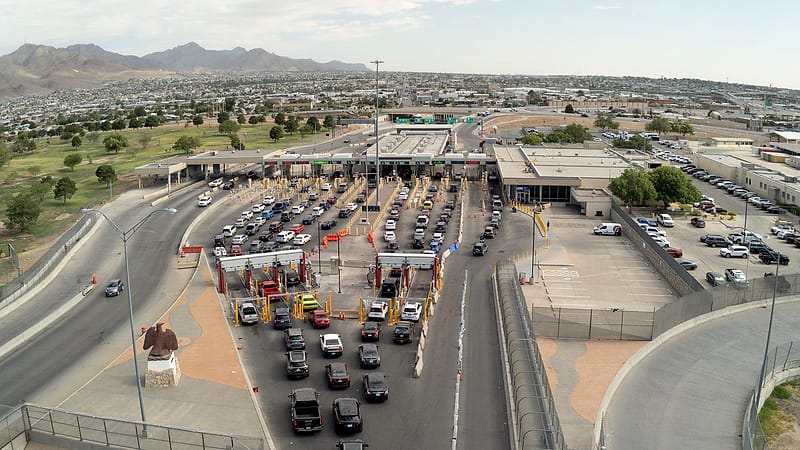
An immigrant arrives at a port of entry holding an envelope nobody has explained and a visa that is not yet status. What happens at the counter over the next several minutes converts the one into the other, or else it does not, and there is no appeal from the booth.
The rule in short
An immigrant visa applicant leaves the consulate with the visa in the passport and, at many posts, a sealed envelope containing the case file. The envelope is for the inspecting officer and must not be opened by the traveler. At the port of entry the immigrant is an applicant for admission: the officer verifies identity, checks the visa, examines admissibility, endorses the passport, and takes the packet. Status begins at admission and not before.
The last instruction most immigrant visa applicants receive at a consulate is not to open something. The envelope handed over with the passport is addressed to an officer the applicant has not met, in a country the applicant has not yet entered, and it is the reason the inspection at the border takes a different shape from an ordinary arrival.
What the packet holds and who it belongs to
The envelope contains the consular case file: the approved petition, the civil documents supporting the relationship or the qualification, the results of the medical examination, and in family cases the support undertaking. It is the record the immigration agency needs in order to create a registration file for the new resident and to produce the permanent resident card.
It is not the traveler's copy of anything. The seal is the guarantee that nothing was substituted between the consular section and the port of entry, and an envelope arriving open has lost the only quality that made it useful. The practical advice — carry it in hand luggage, do not check it, do not open it — follows from that and not from ceremony.
The picture is changing. Posts increasingly transmit the file electronically to the agencies that need it, and applicants processed that way receive no envelope at all. A traveler in that position is not missing a document; there is simply nothing to hand over. What has not changed is the inspection itself, which proceeds identically whether the record arrived by air with the traveler or ahead of the traveler by wire.
Why the visa is not yet status
An immigrant visa is a travel document and a statement that a consular officer found the applicant eligible on the record before that officer. It authorizes travel to a port of entry and an application for admission there. It does not confer permanent resident status, and nothing about it obliges an inspecting officer to admit its holder.
Status begins at admission. That single fact governs a surprising number of downstream questions: when the residence period for naturalization starts, when the right to work begins, when the obligation to register an address attaches, and when the immigration agency's file becomes live. The officer records the admission, endorses the passport, and that endorsement is what the new resident uses as evidence of status until a card exists.
The stamp placed in the passport at admission is valid as evidence of permanent residence for a limited period only. Residents who never receive a card — most often because the post-issuance fee went unpaid — find that the endorsement has quietly lapsed and that ordinary transactions have become difficult. The remedy is to deal with the fee that falls due after issuance before travel rather than after.
The inspection itself is short and structured. An officer at primary inspection confirms identity against the travel document, checks the visa and the systems behind it, and asks a small number of questions about where the traveler will live and who is waiting. Anything unresolved sends the traveler to secondary inspection, which is not a sanction but a different room with more time in it. Families are frequently separated at that point, and the separation is administrative rather than significant.
How an inspection can end
Most inspections end in admission within a few minutes. The others end in one of several distinct ways, and the differences between them matter enormously to what the traveler can do next.
| Outcome | What it means | What follows |
|---|---|---|
| Admission | The officer is satisfied on identity, documents, and admissibility | Status begins; the passport is endorsed and the packet retained |
| Deferred inspection | Admission is postponed pending a document or a check | The traveler enters and reports to a designated office by a set time |
| Withdrawal of the application for admission | The traveler elects to depart rather than press the application | Departure without a removal order, at the officer's discretion |
| Expedited removal | The officer finds a documentary defect or a misrepresentation within the statutory grounds | Removal without a hearing, and a bar on returning for a fixed period |
| Referral to an immigration judge | The case involves a claim or an issue requiring a hearing | Proceedings begin with a charging document served on the traveler |
The gap between withdrawal and expedited removal is the widest in the table. One leaves no order and no statutory bar; the other leaves both. Officers are not obliged to offer withdrawal, and whether it is offered often depends on how the encounter has gone. Where a referral to a judge occurs instead, the charging document itself becomes worth reading closely, since defects in a notice to appear have consequences that reach well beyond formality.
What a traveler can usefully do beforehand
Very little of an inspection is within the traveler's control, but three things are. The first is documentary: keep the packet intact, keep the passport accessible, and be able to state where the family will live. The second is factual: anything that changed after the interview — an arrest, a separation, a new job, a lapsed medical clearance — should have been raised with the post, not saved for the border. The third is procedural: know which port and which flight, because a family arriving on separate itineraries frequently has one member admitted and another referred.
History is the fourth variable and the least visible one. An officer at the counter can see the applicant's immigration record, and a refusal entered years earlier follows the applicant into every later encounter. The agency running the counter is also the agency that classifies imported goods and rules on their treatment, and readers who deal with both sides of it will recognize the same institutional habits at work in the practice of asking customs to rule before goods arrive.
Where a prior refusal, a prior removal, or an unresolved inadmissibility sits in the history, the inspection is a poor place to discover how it will be treated. That is the situation in which arranging matters with a green card lawyer before booking travel is worth more than anything said at an airport, because the officer at the counter has authority to act and no obligation to wait for advice to arrive.
Points to carry away
- The sealed packet contains the consular case file and is addressed to the inspecting officer.
- Opening the envelope invalidates it and creates a delay that is entirely avoidable.
- Many posts now transmit the file electronically, in which case the traveler carries no envelope at all.
- The immigrant visa is a travel document; permanent resident status begins only on admission.
- The officer's endorsement in the passport serves as temporary evidence of status until the card is produced.
- An inspection can end in admission, deferred inspection, withdrawal, expedited removal, or a referral to an immigration judge.
Questions readers ask
What happens if the envelope was opened by mistake?
Say so at the counter rather than presenting it and hoping. An opened packet cannot be accepted as an intact record, and the officer's response depends on what the file contains and whether it can be verified another way. Some travelers are admitted after verification through the agency's own systems; others are sent to deferred inspection to sort it out. Volunteering the fact takes the question out of the realm of concealment, which is the only version of this problem that becomes serious.
Can an immigrant visa holder be refused at the port?
Yes. A visa permits travel and permits an application for admission; it does not compel admission. The inspecting officer applies the grounds of inadmissibility afresh and considers anything that has changed since the interview — a new arrest, a changed relationship, a discovered misstatement, an expired medical clearance. Most refusals of immigrant visa holders arise from facts that came into existence after issuance, which is why material changes should be disclosed to the post rather than carried to the border.
How long is the visa good for once issued?
Immigrant visas carry a validity period on their face, and in practice that period is often governed by the validity of the medical examination behind it rather than by any general rule. Travel has to occur before the printed expiration, and there is no grace period beyond it. Where a family cannot travel in time, the remedy is to approach the issuing post before expiration rather than after, since reissuance is an administrative act while a lapsed case can require the whole documentary exercise again.
Sources
- Cornell Legal Information Institute — 8 U.S.C. 1225, Inspection by Immigration OfficersEstablishes that every arriving person is an applicant for admission and sets out the inspection authorities.
- Cornell Legal Information Institute — 8 U.S.C. 1181, Admission of Former Lawfully Admitted Residents and DocumentationThe documentary requirement an immigrant must satisfy at the port of entry.
- eCFR — 8 CFR Part 235, Inspection of Persons Applying for AdmissionThe regulations on primary and secondary inspection, deferred inspection, and endorsement of documents.
- eCFR — 22 CFR Part 42, Visas: Documentation of Immigrants Under the Immigration and Nationality ActGoverns issuance of the immigrant visa and the file transmitted with or for the applicant.
- U.S. Department of State — Immigrant Visa Process: After the InterviewThe instruction not to open the sealed packet and to carry it rather than check it.
- U.S. Customs and Border Protection — Form I-94 Arrival/Departure Record InstructionsHow arrival records are created and retrieved after an inspection.
- eCFR — 8 CFR Part 264, Registration and FingerprintingThe registration record created from the admitted immigrant's file and the card that evidences it.
Justice Partners Journal is a publication, not a law firm. This article states general rules and cites its sources; it is not advice about any particular case, and the law differs by state and changes over time.